Ad Pods in Video Advertising: Complete Guide for Publishers and Ad Ops
Learn how ad pods maximize video monetization. Comprehensive guide covering implementation, optimization, and best practices for publishers.
Ad Pods in Video Advertising: Complete Guide for Publishers and Ad Ops
As video streaming continues to dominate digital consumption, publishers are constantly seeking ways to optimize their ad revenue while maintaining viewer engagement. One of the most effective strategies in this pursuit is the strategic implementation of ad pods. This comprehensive guide explores everything publishers and ad ops professionals need to know about ad pods, from basic concepts to advanced optimization techniques.
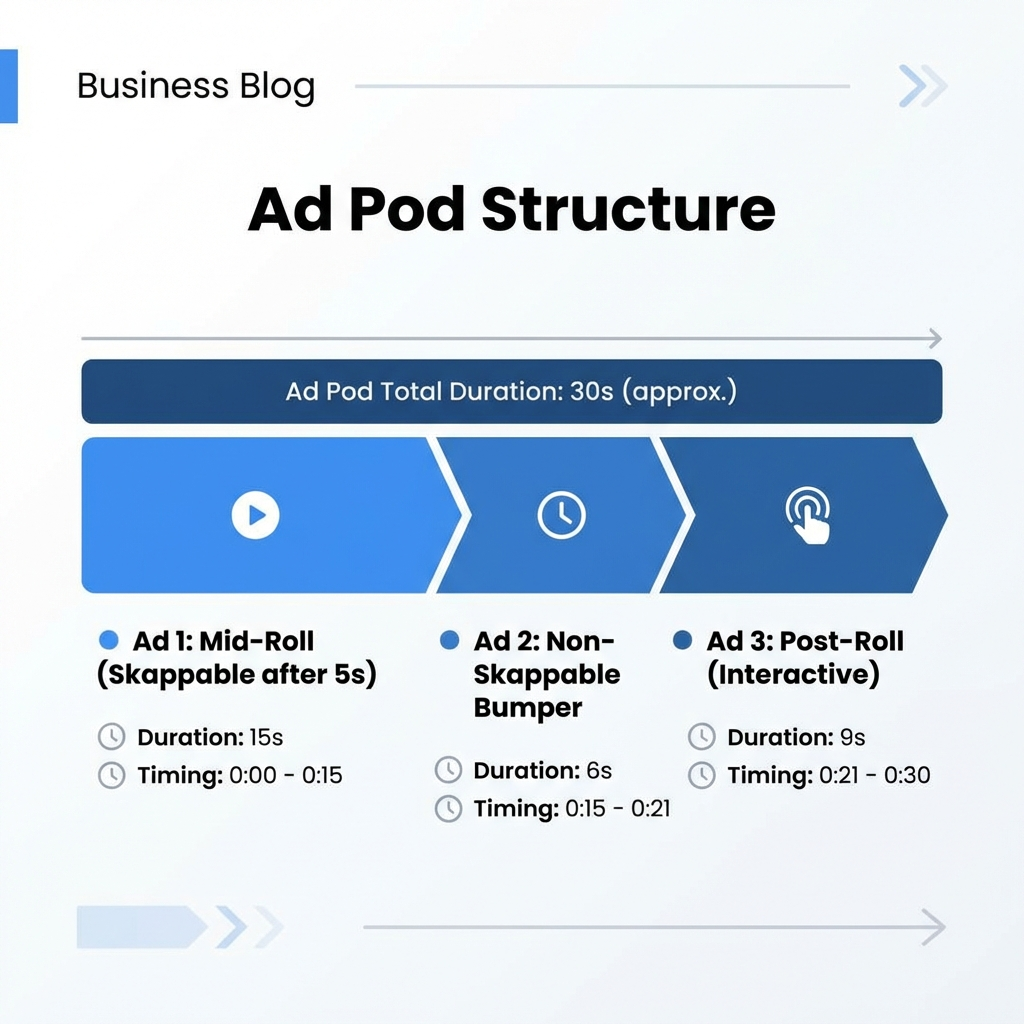
What Are Ad Pods?
Ad pods represent a fundamental shift in how video advertising is structured and delivered. Unlike traditional single-ad placements, an ad pod is a sequence of multiple video advertisements that play consecutively within a single ad break. This approach mirrors the familiar commercial break structure from traditional television, making the viewing experience more natural for audiences while creating enhanced monetization opportunities for publishers.
The concept extends beyond simply playing multiple ads back-to-back. Ad pods involve sophisticated orchestration of different ad formats, durations, and targeting strategies to create cohesive advertising experiences. A typical ad pod might contain 2-6 individual advertisements, with total durations ranging from 60 to 180 seconds, depending on the content type and platform strategy.
For publishers, ad pods represent a powerful tool for maximizing the value of each ad break while providing advertisers with premium inventory that commands higher CPMs. The strategic implementation of ad pods can significantly impact both user experience and revenue generation.
Technical Implementation of Ad Pods
VMAP Integration
Video Multiple Ad Playlist (VMAP) serves as the backbone for ad pod implementation. VMAP allows publishers to define multiple ad breaks within a single video stream, specifying exactly when and how ad pods should be triggered. This XML-based standard provides the framework for complex ad scheduling scenarios.
The VMAP structure enables publishers to:
- Define precise timing for ad pod insertion
- Specify the number of ads within each pod
- Set maximum duration limits for individual pods
- Configure fallback scenarios for unfilled inventory
A typical VMAP implementation for ad pods includes detailed breakpoint definitions, each containing multiple AdSource elements that represent individual ads within the pod. Publishers can leverage VMAP's flexibility to create sophisticated ad experiences that adapt to different content types and viewer segments.
Server-Side Ad Insertion (SSAI)
Modern ad pod implementations increasingly rely on server-side ad insertion technology to deliver seamless viewing experiences. SSAI eliminates the buffering and quality transitions that can occur with client-side ad insertion, creating television-like ad experiences that viewers find more acceptable.
SSAI for ad pods involves:
- Real-time transcoding of ads to match content quality
- Seamless transitions between ads within pods
- Consistent audio levels across all pod elements
- Unified reporting and tracking capabilities
The technical complexity of SSAI requires robust infrastructure capable of handling real-time ad decisioning, transcoding, and delivery at scale. Publishers must ensure their ad serving stack can manage the increased complexity of multi-ad pod assembly while maintaining low latency.
Player Integration
Video player technology plays a crucial role in ad pod execution. Modern video players must support advanced ad scheduling, comprehensive tracking, and smooth playback transitions. Players need to handle complex scenarios such as:
- Dynamic pod length adjustment based on available inventory
- Interactive elements within individual pod ads
- User controls during ad pod playback
- Error handling and fallback ad serving
Solutions like Veedmo provide publishers with video player technology specifically designed to handle complex ad pod scenarios while maintaining optimal user experiences across different devices and connection speeds.
Ad Pod Strategies and Best Practices
Optimal Pod Length and Frequency
Determining the ideal ad pod configuration requires balancing revenue maximization with user experience preservation. Industry research suggests that viewer tolerance for ad pods varies significantly based on content type, viewing context, and audience demographics.
For long-form content (30+ minutes), publishers typically implement:
- 90-180 second ad pods every 8-12 minutes
- 3-6 ads per pod with varying durations
- Strategic placement at natural content breaks
Short-form content (under 10 minutes) requires more conservative approaches:
- Single pre-roll or post-roll pods
- Maximum 60-90 second pod durations
- Focus on high-impact, premium ad formats
The key lies in testing different configurations and measuring both engagement metrics and revenue impact. Publishers should implement A/B testing frameworks to optimize pod parameters continuously.
Competitive Separation
One of the most critical aspects of ad pod management involves preventing competitive conflicts within individual pods. Publishers must implement sophisticated competitive separation logic to avoid placing competing advertisers adjacent to each other within the same pod.
Effective competitive separation strategies include:
- Industry category blocking (automotive brands separated by non-automotive ads)
- Brand-specific exclusion lists
- Geographic targeting considerations
- Seasonal campaign conflict management
Advanced ad servers can automatically manage competitive separation through real-time decisioning algorithms that consider multiple factors when assembling ad pods. This capability becomes increasingly important as pod complexity grows.
Creative Variety and Sequencing
Successful ad pods require thoughtful consideration of creative variety and sequencing. Monotonous ad experiences can lead to increased abandonment rates and reduced advertiser effectiveness. Publishers should strive for:
- Varied ad durations within pods (mixing 15s, 30s, and 60s spots)
- Different creative styles and formats
- Strategic placement of high-impact ads within pods
- Consideration of narrative flow and viewer attention spans
Some publishers implement "bookend" strategies, placing premium or interactive ads at the beginning and end of pods to maximize engagement during peak attention moments.
Monetization Benefits and Revenue Optimization
Premium Inventory Creation
Ad pods enable publishers to create premium inventory packages that command higher CPMs than standard single-ad placements. Advertisers value the extended engagement time and reduced competition for viewer attention that pods provide.
Premium pod inventory typically includes:
- Guaranteed competitive separation
- Strategic placement within content
- Enhanced reporting and attribution
- Cross-pod frequency capping
Publishers can package pod inventory as premium direct-sold opportunities while maintaining programmatic fill for remaining pod positions. This hybrid approach maximizes both premium revenue and overall fill rates.
Programmatic Pod Optimization
Programmatic advertising has evolved to support sophisticated ad pod buying, enabling real-time optimization of pod composition. Publishers can leverage programmatic technologies to:
- Dynamically adjust pod lengths based on available demand
- Optimize ad sequencing for maximum revenue
- Implement advanced targeting within pod contexts
- Enable cross-pod frequency and recency management
Header bidding implementations for video can significantly enhance ad pod revenue by increasing competition for each pod position. Publishers should ensure their header bidding setups account for pod-specific requirements and timing constraints.
Performance Measurement
Effective ad pod monetization requires comprehensive performance measurement that goes beyond traditional video advertising metrics. Publishers should track:
- Pod-level completion rates and abandonment points
- Individual ad performance within pod contexts
- Revenue per pod and effective CPMs
- User engagement patterns across different pod configurations
Advanced analytics platforms can provide insights into optimal pod configurations for different audience segments, enabling data-driven optimization strategies.
Implementation Challenges and Solutions
Technical Complexity
Ad pod implementation introduces significant technical complexity compared to single-ad scenarios. Publishers must manage multiple ad requests, creative assets, and tracking requirements simultaneously. Common challenges include:
- Latency issues during pod assembly
- Creative asset management and caching
- Error handling and fallback scenarios
- Cross-device consistency and performance
Successful implementations require robust testing frameworks and comprehensive monitoring systems to identify and resolve issues quickly.
Inventory Management
Ad pods create complex inventory management scenarios that traditional ad serving systems may struggle to handle effectively. Publishers need sophisticated yield optimization tools that can:
- Balance direct-sold and programmatic demand across pod positions
- Manage frequency caps across multiple pod placements
- Optimize for both short-term revenue and long-term user experience
- Handle dynamic pod length adjustments based on available inventory
User Experience Considerations
While ad pods can enhance monetization, they also present user experience challenges that publishers must carefully navigate. Extended ad breaks can lead to increased abandonment rates if not implemented thoughtfully.
Successful pod implementations focus on:
- Clear communication of ad break duration to viewers
- Engaging creative variety within pods
- Strategic timing aligned with natural content breaks
- Mobile-optimized ad experiences
Future Trends and Innovations
Interactive Ad Pods
Emerging technologies are enabling more interactive and engaging ad pod experiences. Publishers are experimenting with:
- Choose-your-own-adventure style ad sequences
- Interactive overlays during ad pod playback
- Social sharing integrations within ad breaks
- Gamified ad experiences across pod sequences
These innovations can potentially increase user engagement while providing additional value to advertisers.
AI-Driven Pod Optimization
Artificial intelligence and machine learning technologies are beginning to transform ad pod optimization. Advanced algorithms can:
- Predict optimal pod configurations for individual users
- Dynamically adjust creative sequencing based on engagement patterns
- Optimize competitive separation strategies automatically
- Enhance cross-pod frequency management
Connected TV Evolution
The rapid growth of Connected TV (CTV) and streaming platforms is driving new ad pod innovations. CTV environments enable more sophisticated targeting and measurement capabilities while supporting television-like ad experiences that viewers find familiar and acceptable.
Publishers should prepare for continued evolution in CTV ad pod capabilities, including enhanced interactivity, improved attribution, and more sophisticated audience targeting options.
Conclusion
Ad pods represent a powerful tool for publishers seeking to optimize their video advertising revenue while maintaining positive user experiences. Successful implementation requires careful consideration of technical requirements, user experience factors, and ongoing optimization strategies.
As the digital video landscape continues to evolve, publishers who master ad pod implementation will be well-positioned to capitalize on growing advertiser demand for premium video inventory. The key lies in balancing sophisticated technical implementation with thoughtful user experience design, creating ad pod experiences that benefit publishers, advertisers, and viewers alike.
By following the strategies and best practices outlined in this guide, publishers can effectively implement and optimize ad pod solutions that drive meaningful revenue growth while supporting long-term audience engagement and retention goals.
Frequently asked questions
What is the optimal length for an ad pod?
Optimal ad pod length varies by content type and audience. For long-form content, 90-180 seconds works well, while short-form content should limit pods to 60-90 seconds maximum. Test different configurations to find what works best for your specific audience and content.
How do ad pods affect user experience?
When implemented thoughtfully, ad pods can actually improve user experience by creating natural commercial breaks similar to traditional TV. However, poorly executed pods with excessive length or frequency can increase abandonment rates. Focus on strategic timing and creative variety.
Can ad pods be used with programmatic advertising?
Yes, modern programmatic platforms support ad pod buying. Publishers can use header bidding and real-time bidding to fill pod positions while maintaining competitive separation and optimizing for revenue. Many publishers use hybrid approaches combining direct-sold and programmatic demand.
What technical requirements are needed for ad pods?
Ad pod implementation requires VMAP support, compatible video players, server-side ad insertion capabilities, and robust ad serving infrastructure. Publishers also need comprehensive analytics and monitoring systems to track pod performance and optimize configurations.
How do you prevent competing advertisers in the same pod?
Implement competitive separation logic in your ad server that considers industry categories, specific brand conflicts, and advertiser exclusion lists. Advanced ad servers can automatically manage this through real-time decisioning when assembling pods.