Brand Safety in Video Advertising: A Complete Guide for Publishers and Ad Ops
Master brand safety in video advertising with practical strategies, tools, and best practices for publishers to protect revenue while maintaining advertiser trust.
Understanding Brand Safety in Video Advertising
Brand safety has become a critical concern in digital advertising, particularly in video content where brand messaging appears alongside editorial content. For publishers and ad ops professionals, maintaining brand safety standards isn't just about protecting advertisers—it's about preserving long-term revenue streams and building sustainable partnerships.
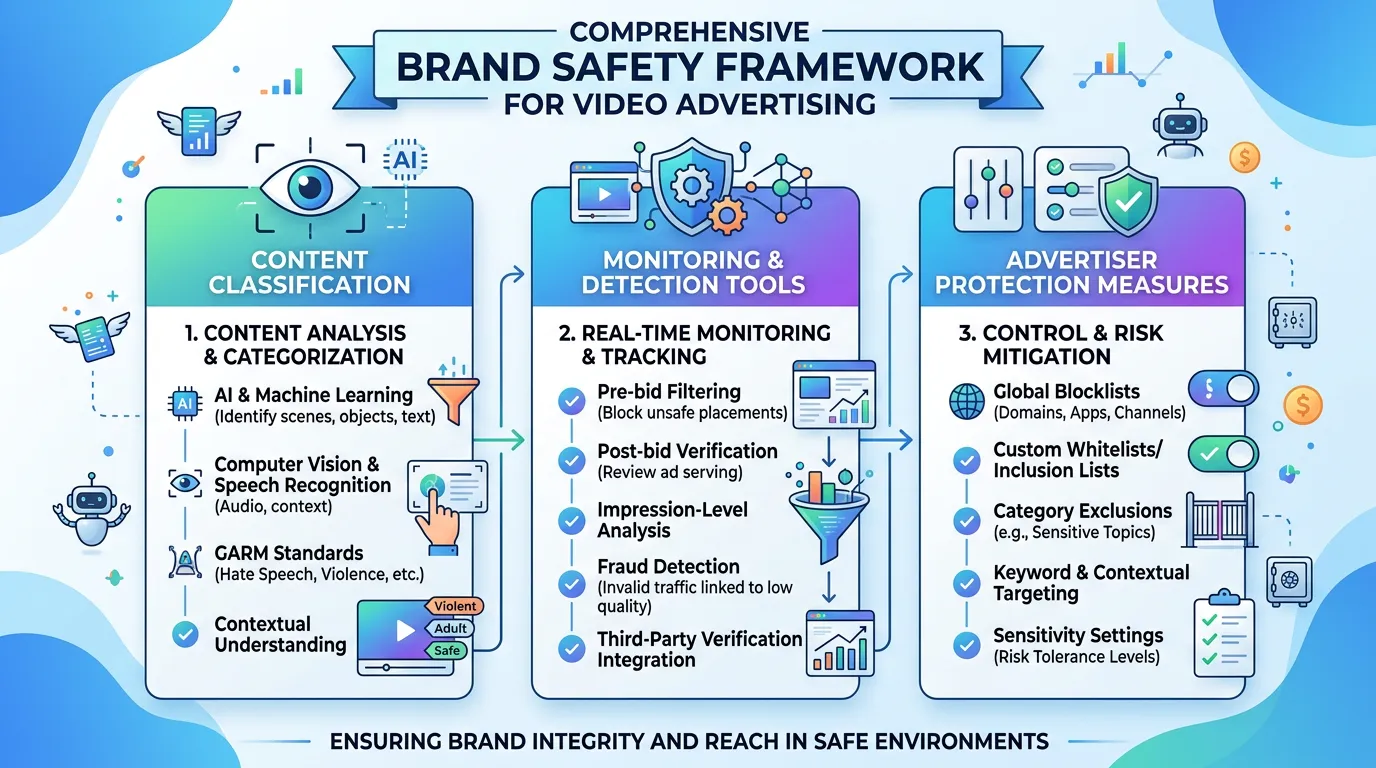
Brand safety in video advertising refers to the measures and practices that ensure ads appear in appropriate contexts that align with advertiser values and don't pose reputational risks. This encompasses everything from content classification to real-time monitoring of ad placements across video inventory.
The Financial Impact of Brand Safety Issues
Brand safety incidents can have severe financial consequences for publishers. According to industry research, advertisers who experience brand safety issues are 2.5 times more likely to reduce spending with affected publishers. The average revenue impact can range from 15-30% reduction in programmatic CPMs when brand safety concerns arise.
Real-World Consequences
Major brand safety incidents have led to:
- Immediate campaign pauses affecting revenue streams
- Long-term exclusion from advertiser buying lists
- Reduced demand in programmatic auctions
- Lower overall yield optimization potential
Publishers must view brand safety as a revenue protection strategy rather than just a compliance requirement.
Key Components of Video Brand Safety
Content Classification and Categorization
Effective brand safety begins with proper content classification. Publishers need systematic approaches to categorize their video content across multiple dimensions:
Content Categories:
- News and current events
- Entertainment and lifestyle
- Sports and recreation
- Educational content
- User-generated content
Risk Assessment Levels:
- Brand-safe (suitable for all advertisers)
- Limited risk (appropriate for most campaigns)
- High-risk (requires advertiser approval)
- Excluded content (unsuitable for advertising)
Contextual Analysis for Video Content
Video content requires more sophisticated analysis than display advertising due to its multi-dimensional nature. Publishers must consider:
Visual Elements:
- Scene analysis and object recognition
- Detection of sensitive imagery
- Brand logo and competitor identification
Audio Components:
- Speech-to-text analysis for controversial language
- Music and sound effect classification
- Tone and sentiment analysis
Metadata and Descriptions:
- Title and description keyword analysis
- Tag and category verification
- Creator and channel reputation scoring
Implementation Strategies for Publishers
Pre-Roll and Mid-Roll Safety Considerations
Different ad formats require tailored brand safety approaches:
Pre-Roll Advertising:
- Content preview analysis to predict upcoming themes
- Thumbnail and title evaluation
- Historical performance data integration
Mid-Roll Placement Strategy:
- Scene-level content analysis for ad insertion points
- Dynamic content monitoring during live streams
- Context-aware ad pod optimization
Publishers using advanced video player solutions like Veedmo can implement real-time brand safety checks at the player level, ensuring appropriate ad serving decisions based on current content context.
Programmatic Brand Safety Controls
In programmatic environments, publishers need robust brand safety frameworks:
Inventory Segmentation:
- Create brand-safe inventory packages
- Implement tiered pricing based on safety levels
- Develop premium brand-safe placements
Real-Time Filtering:
- Deploy content classification APIs
- Implement keyword blocking at the ad server level
- Use machine learning for dynamic content scoring
Transparency Measures:
- Provide detailed inventory descriptions
- Offer content preview capabilities for buyers
- Maintain audit trails for all brand safety decisions
Technology Solutions and Tools
Automated Content Analysis
Modern brand safety relies heavily on automated systems:
AI-Powered Classification:
- Natural language processing for text analysis
- Computer vision for image and video recognition
- Sentiment analysis for contextual understanding
Real-Time Monitoring:
- Continuous content scanning
- Dynamic risk scoring updates
- Automated alert systems for policy violations
Integration with Ad Serving Systems
Effective brand safety requires seamless integration across the ad tech stack:
VAST and VPAID Compliance:
- Brand safety metadata inclusion in VAST responses
- Real-time safety checks during VPAID ad execution
- Error handling for safety violations
Header Bidding Optimization:
- Brand safety signals in bid requests
- Advertiser-specific safety requirements
- Dynamic floor pricing based on safety scores
Industry Standards and Frameworks
Global Alliance for Responsible Media (GARM)
GARM provides industry-standard brand safety categories:
- Adult content
- Arms and ammunition
- Crime and harmful acts
- Death, injury, or military conflict
- Online piracy
- Hate speech and acts of aggression
- Obscenity and profanity
- Illegal drugs
- Tobacco
- Controversial political and social issues
- Debated sensitive social issues
Technical Implementation Standards
Publishers should implement:
- IAB Content Taxonomy classifications
- Ads.txt and sellers.json compliance
- Brand safety certification programs
- Regular third-party audits and verification
Best Practices for Ad Ops Teams
Establishing Internal Processes
Content Review Workflows:
- Initial content classification upon upload
- Regular re-evaluation of existing content
- Special procedures for breaking news or trending topics
- Clear escalation paths for edge cases
Advertiser Communication:
- Proactive notification of potential issues
- Regular brand safety performance reports
- Clear documentation of safety measures
- Responsive incident management procedures
Monitoring and Optimization
Key Performance Indicators:
- Brand safety incident rates
- Advertiser satisfaction scores
- Revenue impact from safety measures
- False positive rates in automated systems
Continuous Improvement:
- Regular algorithm training and updates
- Feedback integration from advertiser concerns
- Industry best practice adoption
- Technology platform evaluations
Advanced Strategies for CTV and FAST Platforms
Connected TV Brand Safety Challenges
CTV environments present unique brand safety considerations:
Live Content Monitoring:
- Real-time content analysis during live broadcasts
- Dynamic ad insertion safety checks
- Breaking news content flagging
Personalized Content Risks:
- User-generated playlist considerations
- Recommendation algorithm oversight
- Cross-device brand safety consistency
FAST Channel Management
Free Ad-Supported Television (FAST) platforms require specialized approaches:
Channel-Level Controls:
- Comprehensive content libraries analysis
- Seasonal content safety reviews
- Genre-specific advertiser matching
Ad Pod Optimization:
- Context-aware ad sequencing
- Competitive separation maintenance
- Brand safety scoring for pod construction
Troubleshooting Common Brand Safety Issues
False Positive Management
Overly aggressive brand safety measures can harm revenue:
Common Causes:
- Keyword-based blocking without context
- Outdated content classification systems
- Inadequate appeal processes
Solutions:
- Implement human review layers
- Use contextual analysis beyond keywords
- Establish clear exception processes
Incident Response Procedures
When brand safety issues occur:
-
Immediate Response:
- Pause affected campaigns
- Document the incident thoroughly
- Notify relevant stakeholders
-
Investigation Phase:
- Identify root causes
- Assess system failures
- Review process gaps
-
Resolution and Prevention:
- Implement corrective measures
- Update policies and procedures
- Enhance monitoring capabilities
Future Trends in Video Brand Safety
Emerging Technologies
Advanced AI Capabilities:
- Improved contextual understanding
- Better false positive reduction
- Enhanced real-time processing
Blockchain Verification:
- Immutable brand safety audit trails
- Decentralized verification systems
- Enhanced transparency mechanisms
Regulatory Developments
Publishers must prepare for:
- Increased government oversight
- Enhanced disclosure requirements
- Stricter liability frameworks
- Cross-border compliance challenges
Measuring Brand Safety Success
Quantitative Metrics
Revenue Protection:
- CPM maintenance across brand-safe inventory
- Fill rate optimization for premium placements
- Long-term advertiser retention rates
Operational Efficiency:
- Incident response times
- Automated vs. manual review ratios
- System accuracy improvements
Qualitative Assessments
Advertiser Feedback:
- Regular satisfaction surveys
- Campaign performance reviews
- Long-term partnership evaluations
Industry Recognition:
- Certification maintenance
- Third-party audit results
- Industry award considerations
Conclusion
Brand safety in video advertising represents both a challenge and an opportunity for publishers. By implementing comprehensive brand safety strategies, publishers can protect their revenue streams while building stronger advertiser relationships. The key lies in balancing automated efficiency with human oversight, maintaining transparency while preserving competitive advantages, and continuously evolving practices to meet changing industry standards.
Success in brand safety requires ongoing investment in technology, processes, and people. Publishers who prioritize brand safety as a core business function rather than a compliance afterthought will be better positioned to thrive in an increasingly complex digital advertising ecosystem.
Frequently asked questions
What is brand safety in video advertising?
Brand safety in video advertising refers to measures that ensure ads appear alongside appropriate content that aligns with advertiser values and doesn't pose reputational risks. It includes content classification, real-time monitoring, and context-aware ad placement.
How does brand safety impact publisher revenue?
Brand safety directly affects revenue through CPM rates, advertiser retention, and programmatic demand. Publishers with poor brand safety can see 15-30% reductions in programmatic CPMs and lose long-term advertiser partnerships.
What are the main brand safety categories publishers should monitor?
Key categories include adult content, violence, hate speech, illegal activities, controversial political content, and debated social issues. Publishers should follow GARM (Global Alliance for Responsible Media) standards for comprehensive coverage.
How do pre-roll and mid-roll ads differ in brand safety requirements?
Pre-roll ads require content preview analysis and title evaluation, while mid-roll ads need scene-level analysis for insertion points and dynamic content monitoring. Mid-roll placement requires more sophisticated contextual understanding.
What technology solutions help automate brand safety for video content?
AI-powered solutions include natural language processing for text analysis, computer vision for video recognition, real-time content scanning, and automated classification systems integrated with ad serving platforms.