Header Bidding for Publishers: Complete Guide to Revenue Optimization
Comprehensive guide to header bidding for publishers. Learn implementation, benefits, challenges, and best practices to maximize ad revenue.
What is Header Bidding?
Header bidding represents one of the most significant innovations in programmatic advertising, fundamentally transforming how publishers monetize their digital inventory. At its core, header bidding is a programmatic advertising technique that allows publishers to offer their ad inventory to multiple ad exchanges and demand sources simultaneously before making calls to their ad server.
Unlike the traditional waterfall method where ad networks bid sequentially based on predetermined priority, header bidding creates a unified auction environment where all demand partners compete on equal footing. This democratic approach to ad selling has proven to increase publisher revenue by 20-50% on average, making it an essential strategy for modern digital publishers.
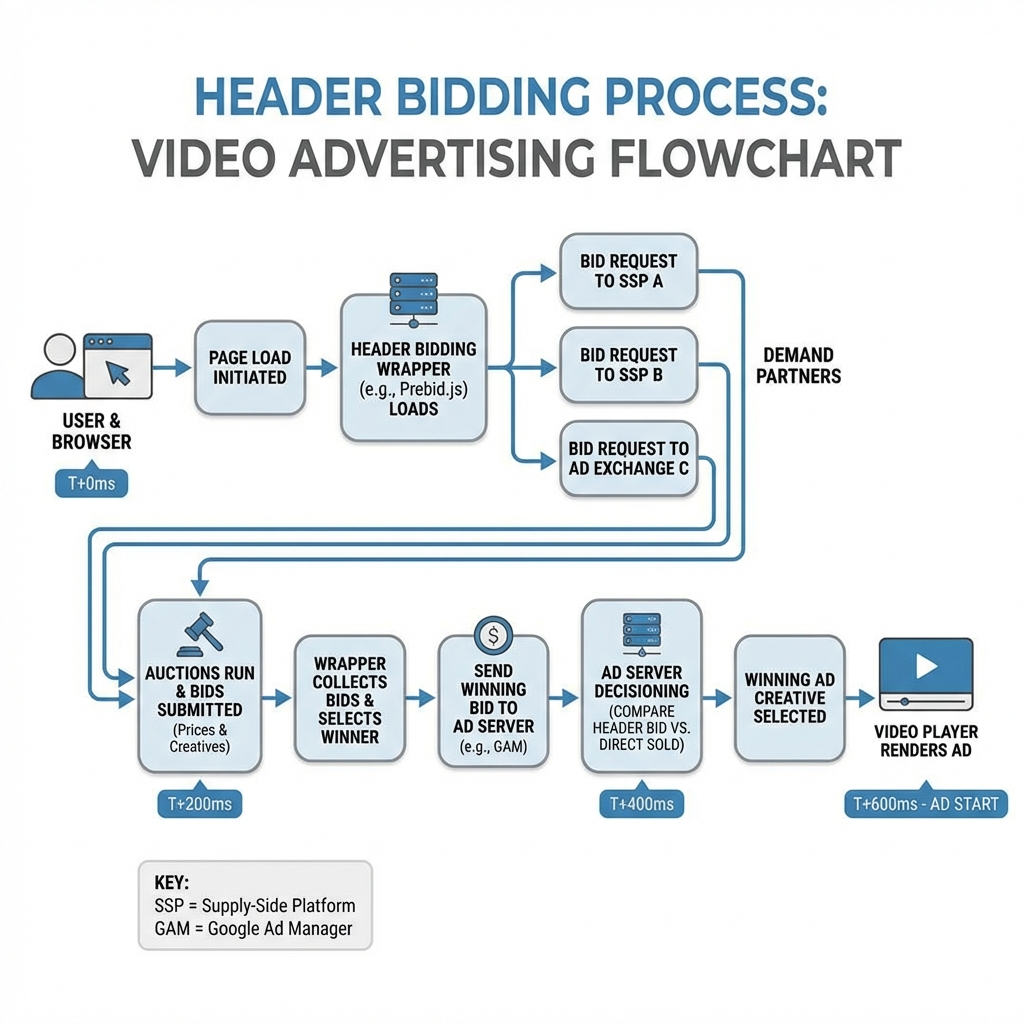
The technology works by implementing JavaScript code in the header of web pages (hence the name), which triggers simultaneous bid requests to multiple demand sources. These bids are then passed to the publisher's ad server, where they compete against direct-sold campaigns and other inventory in a unified auction.
How Header Bidding Works: The Technical Process
The Auction Mechanics
The header bidding process follows a sophisticated sequence that occurs within milliseconds:
- Page Load Initiation: When a user visits a publisher's website, the header bidding wrapper code loads before the page content
- Simultaneous Bid Requests: The wrapper sends bid requests to all configured demand partners (SSPs, exchanges, and networks)
- Bid Collection: Demand partners analyze the impression opportunity and submit their bids within a predefined timeout period (typically 1-2 seconds)
- Bid Processing: The wrapper collects all bids and formats them for the ad server
- Unified Auction: All header bids compete against direct-sold campaigns and other line items in the ad server
- Winner Selection: The highest bid wins the impression, and the corresponding creative is served
Client-Side vs Server-Side Implementation
Client-Side Header Bidding executes all auction logic in the user's browser. While this approach offers publishers maximum control and transparency, it can impact page load times and user experience, especially on mobile devices.
Server-Side Header Bidding moves the auction logic to remote servers, reducing browser load and latency. However, this method may result in reduced bid density due to limited user data availability and can introduce dependency on third-party infrastructure.
Many publishers adopt a hybrid approach, combining both methods to optimize for performance and revenue.
Benefits of Header Bidding for Publishers
Increased Revenue and Yield
The primary advantage of header bidding is significant revenue uplift. By creating true competition among demand sources, publishers typically see:
- 20-50% increase in programmatic revenue
- Higher fill rates across all inventory types
- Improved price discovery for premium inventory
- Better monetization of remnant inventory
Enhanced Control and Transparency
Header bidding provides publishers with unprecedented visibility into their ad ecosystem:
- Real-time bid data from all demand partners
- Performance analytics at the partner level
- Granular reporting on win rates, timeouts, and errors
- Full control over auction parameters and partner configurations
Reduced Dependency on Single Partners
The diversified approach reduces risk and provides:
- Multiple demand sources competing simultaneously
- Reduced reliance on any single ad network or exchange
- Better negotiating position with demand partners
- Improved resilience against partner outages or issues
Implementation Strategies and Best Practices
Choosing the Right Wrapper Solution
Publishers can implement header bidding through various approaches:
Prebid.js remains the most popular open-source solution, offering:
- Extensive demand partner integrations
- Active community support
- Customizable features and modules
- Transparent, non-proprietary code
Proprietary Wrappers from major ad tech vendors provide:
- Integrated solutions with existing ad serving infrastructure
- Dedicated support and optimization services
- Advanced features like dynamic timeouts and machine learning optimization
Partner Selection and Management
Successful header bidding implementation requires strategic partner selection:
- Quality over Quantity: Start with 5-8 high-performing partners rather than integrating every available option
- Complementary Demand: Choose partners with different buyer bases and specializations
- Geographic Relevance: Ensure partners have strong demand in your key markets
- Technical Reliability: Prioritize partners with low timeout rates and stable infrastructure
Performance Optimization
Timeout Management
Optimal timeout settings balance revenue and user experience:
- Desktop: 1500-2000ms typically optimal
- Mobile: 1000-1500ms recommended
- Dynamic Timeouts: Adjust based on device, connection, and partner performance
Ad Unit Configuration
Proper ad unit setup maximizes effectiveness:
- Size Mapping: Configure responsive ad units for multiple screen sizes
- Floor Prices: Set appropriate minimum bids to maintain inventory value
- Frequency Capping: Implement limits to improve user experience
Common Challenges and Solutions
Latency and Page Performance
Challenge: Header bidding can increase page load times, potentially impacting user experience and SEO rankings.
Solutions:
- Implement strict timeout controls
- Use asynchronous loading techniques
- Consider server-side solutions for mobile traffic
- Monitor Core Web Vitals and adjust configurations accordingly
Technical Complexity
Challenge: Header bidding requires significant technical expertise and ongoing maintenance.
Solutions:
- Partner with experienced ad ops teams or consultants
- Invest in proper monitoring and alerting systems
- Maintain detailed documentation of configurations
- Regular testing and optimization protocols
Data Privacy and Compliance
Challenge: Evolving privacy regulations affect data sharing and targeting capabilities.
Solutions:
- Implement proper consent management platforms
- Work with partners supporting privacy-compliant targeting
- Prepare for cookieless advertising through alternative identifiers
- Regular compliance audits and updates
Advanced Features and Optimization
Dynamic Allocation Integration
Google Ad Manager's Dynamic Allocation allows header bidding to compete with AdSense and AdX demand, creating a truly unified auction. This integration typically results in additional 5-15% revenue uplift.
Price Granularity Optimization
Fine-tuning price buckets enhances bid accuracy:
- Dense Granularity: $0.01 increments for premium inventory
- Medium Granularity: $0.10 increments for standard inventory
- Custom Granularity: Tailored buckets based on historical performance
Video Header Bidding
Video inventory particularly benefits from header bidding due to higher CPMs and competition. Publishers using video players like Veedmo can implement video header bidding to maximize revenue from their video content through simultaneous competition among video-specific demand sources.
Real-Time Reporting and Analytics
Advanced implementations include:
- Bid landscape analysis to identify optimization opportunities
- Partner performance dashboards for data-driven decisions
- Revenue attribution across all demand sources
- Automated alerting for technical issues or performance drops
Future of Header Bidding
Server-Side Evolution
Server-side header bidding continues evolving with:
- Improved user data handling through privacy-compliant methods
- Enhanced bid caching and prediction algorithms
- Better integration with client-side solutions
- Reduced latency through edge computing
Privacy-First Adaptations
The industry is adapting to privacy changes through:
- First-party data utilization for better targeting
- Contextual advertising integration within header bidding
- Alternative identifier support for cookieless environments
- Enhanced consent management integration
Emerging Technologies
Machine Learning Integration: AI-powered optimization of timeouts, partner selection, and bid predictions
Blockchain Applications: Transparent and verifiable auction processes
5G Impact: Reduced latency enabling more sophisticated real-time bidding
Measuring Success and ROI
Key Performance Indicators
Successful header bidding implementation should improve:
- Revenue per Thousand Impressions (RPM): 20-50% increase typical
- Fill Rate: Often reaches 95%+ with proper implementation
- Viewability: Maintained or improved through better demand quality
- Page Load Times: Should remain within acceptable limits
A/B Testing Framework
Implement controlled testing to measure impact:
- Geographic Split Testing: Compare regions with and without header bidding
- Traffic Percentage Testing: Gradually roll out to user segments
- Time-Based Comparisons: Analyze performance before and after implementation
Long-Term Optimization Strategy
Continuous improvement requires:
- Monthly partner performance reviews
- Quarterly configuration optimization
- Annual technology stack evaluation
- Ongoing training for ad ops teams
Conclusion
Header bidding has become an indispensable tool for publishers seeking to maximize their digital advertising revenue. While implementation requires technical expertise and ongoing optimization, the benefits significantly outweigh the challenges for most publishers.
Success with header bidding depends on strategic planning, proper implementation, and continuous optimization. Publishers should focus on selecting quality demand partners, maintaining optimal performance settings, and staying current with industry developments.
As the advertising technology landscape continues evolving with privacy regulations and new targeting methods, header bidding remains adaptable and relevant. Publishers who master this technology will be better positioned to thrive in the competitive digital advertising ecosystem.
The key to header bidding success lies in treating it as an ongoing optimization process rather than a one-time implementation. Regular monitoring, testing, and adjustment ensure sustained revenue growth and competitive advantage in the programmatic advertising marketplace.
Frequently asked questions
What is the typical revenue increase from implementing header bidding?
Publishers typically see a 20-50% increase in programmatic revenue after implementing header bidding, though results vary based on site traffic, content quality, and implementation strategy.
How does header bidding affect page load times?
Header bidding can add 200-500ms to page load times if not properly optimized. Using appropriate timeouts, server-side solutions, and performance monitoring helps minimize impact while maximizing revenue.
Should I use client-side or server-side header bidding?
Many publishers use a hybrid approach: client-side for desktop traffic where latency is less critical, and server-side for mobile traffic to improve user experience. The choice depends on your audience and performance priorities.
How many demand partners should I integrate?
Start with 5-8 high-quality partners rather than integrating every available option. Too many partners can hurt performance without proportional revenue gains. Focus on partners with complementary demand and strong performance in your markets.
Is header bidding compliant with privacy regulations like GDPR?
Yes, header bidding can be GDPR compliant when properly implemented with consent management platforms and privacy-compliant demand partners. Ensure all partners support necessary privacy frameworks and data handling requirements.