Video Viewability: The Complete Guide to Maximizing Ad Revenue in 2024
Master video viewability standards, measurement, and optimization strategies to boost ad revenue. Essential guide for publishers and ad ops professionals.
Video Viewability: The Complete Guide to Maximizing Ad Revenue in 2024
Video viewability has become one of the most critical metrics in digital advertising, directly impacting publisher revenue and advertiser satisfaction. As video content continues to dominate digital consumption—accounting for over 82% of internet traffic according to Cisco—understanding and optimizing viewability is essential for publishers and ad operations professionals.
What is Video Viewability?
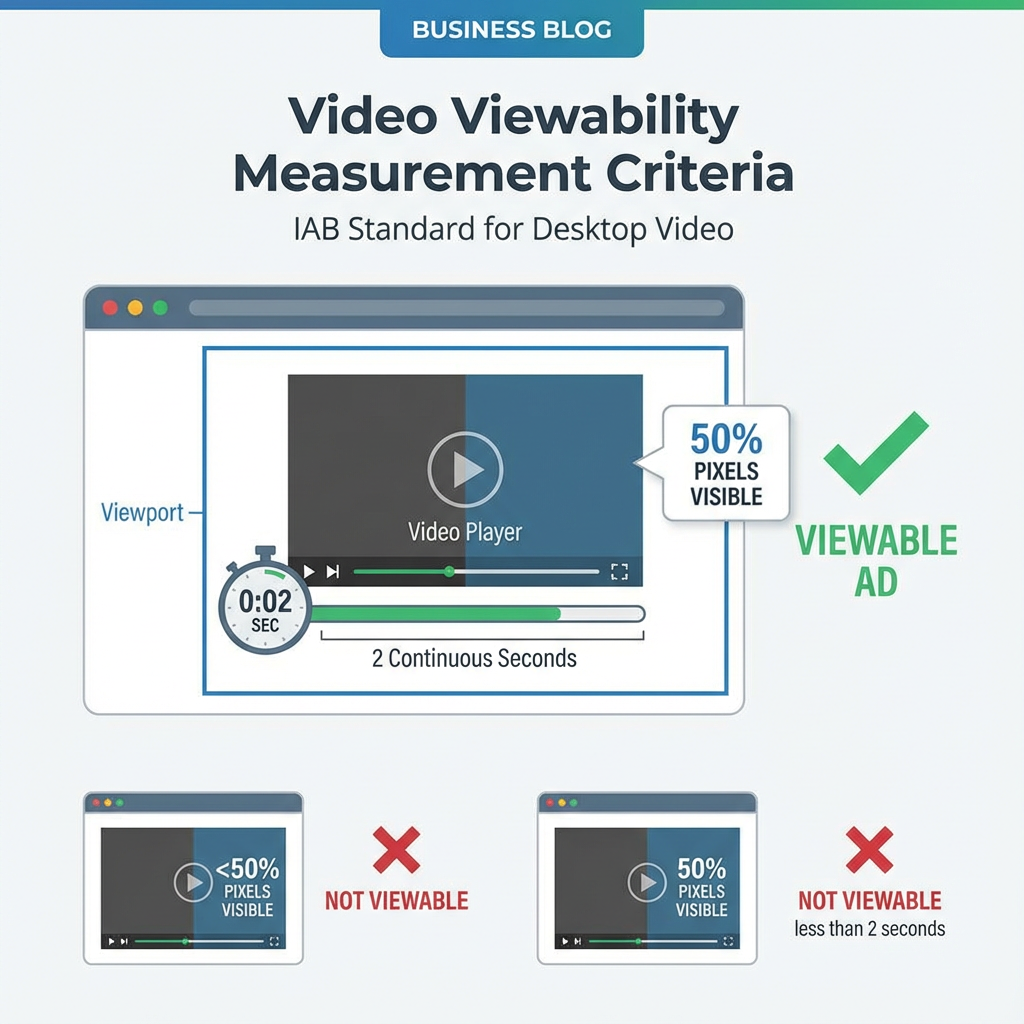
Video viewability measures whether a video ad is actually seen by a user, not just served on a webpage. Unlike traditional display ads, video viewability has specific criteria that must be met for an impression to be considered "viewable."
Industry Standard Viewability Requirements
The Interactive Advertising Bureau (IAB) and Media Rating Council (MRC) have established clear guidelines for video viewability:
- 50% of the video player's pixels must be visible on screen
- The video must be continuously viewable for at least 2 seconds
- These conditions must be met simultaneously
For large format video ads (242,500 pixels or larger), only 30% of pixels need to be visible, but the 2-second requirement remains unchanged.
Why Video Viewability Matters More Than Ever
Publishers face increasing pressure to demonstrate ad effectiveness, especially as advertising budgets shift toward performance-driven campaigns. Poor viewability directly impacts:
- Revenue optimization: Advertisers pay premium rates for viewable impressions
- Programmatic performance: Demand-side platforms (DSPs) increasingly filter inventory based on viewability rates
- Long-term partnerships: Brands prefer working with publishers who consistently deliver high viewability
Measuring Video Viewability: Tools and Technologies
Third-Party Viewability Vendors
Most publishers rely on specialized viewability measurement partners:
Integral Ad Science (IAS)
- Real-time viewability measurement
- Advanced fraud detection
- Cross-device tracking capabilities
DoubleVerify
- Comprehensive viewability reporting
- Brand safety integration
- Custom viewability thresholds
Moat (Oracle Data Cloud)
- Detailed attention metrics
- Video completion rate analysis
- Audience verification
JavaScript-Based Measurement
Viewability measurement typically relies on JavaScript tags that monitor:
- Player position relative to viewport
- Scroll behavior and page engagement
- Video play states and user interactions
- Time spent in viewable state
VAST Integration for Viewability
Video Ad Serving Template (VAST) tags enable viewability tracking by:
- Embedding measurement pixels within video creative
- Triggering viewability beacons at specific intervals
- Providing standardized reporting across platforms
Factors Affecting Video Viewability
Page Layout and Ad Placement
Above-the-fold placement remains the gold standard for viewability, but modern web design requires more nuanced approaches:
- Hero video units: Large, prominent placements typically achieve 70-80% viewability
- In-content placements: Strategic positioning within article flow can achieve 60-70% viewability
- Sidebar placements: Often struggle with viewability due to user behavior patterns
Video Player Configuration
Autoplay Settings Autoplay policies significantly impact viewability measurement:
- Sound-on autoplay: Generally prohibited by browsers, but achieves highest viewability when allowed
- Muted autoplay: Balances user experience with viewability performance
- Click-to-play: Lowest viewability rates but highest user engagement
Player Size Optimization Larger players generally achieve better viewability, but publishers must balance:
- User experience considerations
- Page load performance
- Mobile responsiveness
- Content layout requirements
Technical Implementation Factors
Lazy Loading Impact While lazy loading improves page performance, it can affect viewability measurement timing. Best practices include:
- Implementing proper intersection observer APIs
- Adjusting viewability measurement triggers
- Testing across different scroll speeds
Ad Server Configuration Proper ad serving setup ensures accurate viewability measurement:
- Correct VAST wrapper implementation
- Proper timeout configurations
- Fallback ad handling
Optimization Strategies for Publishers
Strategic Ad Placement
The "Sticky" Player Approach Implementing sticky or floating video players can dramatically improve viewability:
- Players follow users as they scroll
- Maintains visibility throughout page engagement
- Can achieve 80-90% viewability rates when properly implemented
Content-Integrated Video Placing video ads within natural content breaks:
- Higher user attention and engagement
- Better viewability performance than sidebar placements
- Improved completion rates
Technical Optimizations
Page Speed Improvements Faster-loading pages correlate with better viewability:
- Optimize image compression and delivery
- Implement efficient caching strategies
- Use content delivery networks (CDNs)
- Minimize render-blocking resources
Mobile-First Design With mobile traffic dominating, mobile viewability optimization is crucial:
- Responsive video player design
- Touch-friendly controls
- Optimized loading for slower connections
- Consideration of mobile viewing behaviors
Header Bidding Integration
Header bidding can improve viewability through:
- Better demand competition: Higher-paying advertisers often have stricter viewability requirements
- Real-time optimization: Bidders can adjust bids based on predicted viewability
- Premium inventory prioritization: Quality advertisers prefer viewable placements
Industry Benchmarks and Performance Standards
Current Viewability Benchmarks
According to recent industry reports:
- Desktop video ads: Average 65-70% viewability rate
- Mobile video ads: Average 55-60% viewability rate
- Connected TV (CTV): Typically achieves 90%+ viewability due to full-screen viewing
- Premium publishers: Often achieve 75-85% viewability through optimization
Setting Realistic Goals
Publishers should establish viewability targets based on:
- Historical performance data
- Industry vertical benchmarks
- Ad format and placement types
- Audience behavior patterns
Tiered Viewability Goals
- Baseline: 50% viewability rate
- Good: 65% viewability rate
- Excellent: 75%+ viewability rate
Advanced Viewability Considerations
Fraud Prevention and Viewability
Invalid Traffic (IVT) Impact Bot traffic can artificially inflate or deflate viewability metrics:
- Implement robust fraud detection
- Monitor traffic quality indicators
- Use multiple measurement vendors for verification
Brand Safety Integration Viewability measurement should integrate with brand safety tools:
- Content categorization accuracy
- Contextual relevance scoring
- User-generated content monitoring
Cross-Device Measurement Challenges
Mobile App vs. Web Different measurement methodologies across platforms:
- App-based measurement relies on native APIs
- Web measurement uses JavaScript intersection observers
- Cross-platform reporting requires careful data normalization
Connected TV Considerations CTV environments require specialized viewability approaches:
- Full-screen viewing assumptions
- Limited measurement technology options
- Focus on completion rates and attention metrics
Future of Video Viewability
Emerging Standards and Technologies
Attention-Based Metrics The industry is evolving beyond basic viewability toward attention measurement:
- Eye-tracking integration
- Mouse movement and scroll behavior analysis
- Time-in-view quality scoring
- Active vs. passive viewing detection
Privacy-First Measurement As privacy regulations evolve, viewability measurement must adapt:
- First-party data utilization
- Consent management integration
- Cookieless measurement solutions
- Privacy-preserving analytics
Technology Integration Trends
AI-Powered Optimization Machine learning is enhancing viewability optimization:
- Predictive placement algorithms
- Real-time bid adjustment based on viewability likelihood
- Automated creative optimization
- User behavior pattern recognition
5G Impact on Video Viewability Faster mobile networks are changing video consumption patterns:
- Higher quality video delivery
- Reduced buffering and loading issues
- Changed user engagement behaviors
- New opportunities for premium video experiences
Implementing Viewability Best Practices
Publisher Action Plan
Phase 1: Measurement Setup
- Implement comprehensive viewability tracking across all video inventory
- Establish baseline performance metrics
- Set up regular reporting and monitoring
- Integrate with existing ad operations workflows
Phase 2: Optimization Implementation
- Test different ad placements and formats
- Optimize page loading and rendering performance
- Implement responsive video player solutions like Veedmo to ensure optimal viewing experiences across devices
- A/B test autoplay and player configuration settings
Phase 3: Advanced Strategy
- Integrate viewability data with programmatic optimization
- Develop custom reporting and alerting systems
- Establish advertiser communication protocols
- Implement fraud prevention and quality assurance measures
Ongoing Monitoring and Optimization
Key Performance Indicators (KPIs)
- Overall viewability rate trends
- Viewability by placement and format
- Revenue per viewable impression
- Advertiser satisfaction and retention
- Technical performance metrics
Regular Review Processes
- Weekly performance monitoring
- Monthly optimization reviews
- Quarterly strategic planning
- Annual technology and vendor evaluation
Conclusion
Video viewability represents a critical intersection of user experience, technical implementation, and revenue optimization for publishers. Success requires a comprehensive approach that combines proper measurement, strategic placement, technical optimization, and ongoing monitoring.
As the digital advertising landscape continues to evolve toward performance-based buying and attention-focused metrics, publishers who master viewability optimization will maintain competitive advantages in programmatic auctions and direct sales negotiations.
The key to long-term success lies in treating viewability not as a standalone metric, but as part of a holistic approach to delivering value to both advertisers and audiences. Publishers who consistently deliver high-viewability video inventory will find themselves preferred partners for premium advertising campaigns and programmatic demand.
By implementing the strategies and best practices outlined in this guide, publishers can significantly improve their video viewability performance, leading to increased revenue, stronger advertiser relationships, and sustainable business growth in the competitive digital advertising marketplace.
Frequently asked questions
What is the minimum viewability rate publishers should target?
Publishers should aim for at least 65% viewability rate as a baseline, with top-performing sites achieving 75%+ through proper optimization techniques and strategic ad placement.
How does video viewability measurement differ from display ad viewability?
Video viewability requires 50% of pixels visible for 2 continuous seconds, compared to display ads which need 50% visible for just 1 second. Video measurement is more complex due to player states and autoplay considerations.
Can autoplay policies affect video viewability rates?
Yes, browser autoplay restrictions significantly impact viewability. Muted autoplay generally provides the best balance between viewability performance and user experience compliance with browser policies.
What's the difference between viewability measurement vendors?
Major vendors like IAS, DoubleVerify, and Moat offer similar core measurement but differ in reporting interfaces, additional features like fraud detection, and integration capabilities with ad servers and DSPs.
How does mobile video viewability compare to desktop performance?
Mobile video viewability typically runs 10-15 percentage points lower than desktop (55-60% vs 65-70%) due to smaller screens, different user behaviors, and technical measurement challenges.