VPAID Complete Guide: Interactive Video Ads for Publishers in 2024
Master VPAID implementation for interactive video ads. Learn benefits, challenges, and best practices for publishers to maximize ad revenue and engagement.
VPAID Complete Guide: Interactive Video Ads for Publishers in 2024
Video Player-Ad Interface Definition (VPAID) has become a cornerstone technology for publishers looking to deliver rich, interactive video advertising experiences. As digital advertising evolves beyond simple linear video ads, VPAID enables sophisticated ad formats that can significantly boost engagement and revenue potential.
What is VPAID?
VPAID (Video Player-Ad Interface Definition) is an Interactive Advertising Bureau (IAB) standard that defines the interface between video players and video ad units. Unlike traditional linear video ads that simply play from start to finish, VPAID ads are interactive applications that can respond to user actions, collect data, and provide enhanced functionality.
The VPAID specification creates a standardized communication protocol between the video player and the ad creative, allowing for:
- Real-time interaction during ad playback
- Custom tracking and analytics collection
- Dynamic ad content modification
- Advanced user engagement features
- Cross-platform compatibility
VPAID vs Linear Video Ads
Traditional linear video ads are static video files (MP4, WebM) that play sequentially without user interaction beyond basic video controls. VPAID ads, conversely, are executable applications (typically Flash SWF or JavaScript) that can:
- Pause, resume, or modify playback based on user actions
- Display overlay content and interactive elements
- Capture detailed engagement metrics
- Adapt content based on viewing context
- Integrate with third-party services and APIs
How VPAID Works: Technical Architecture
The VPAID Ecosystem
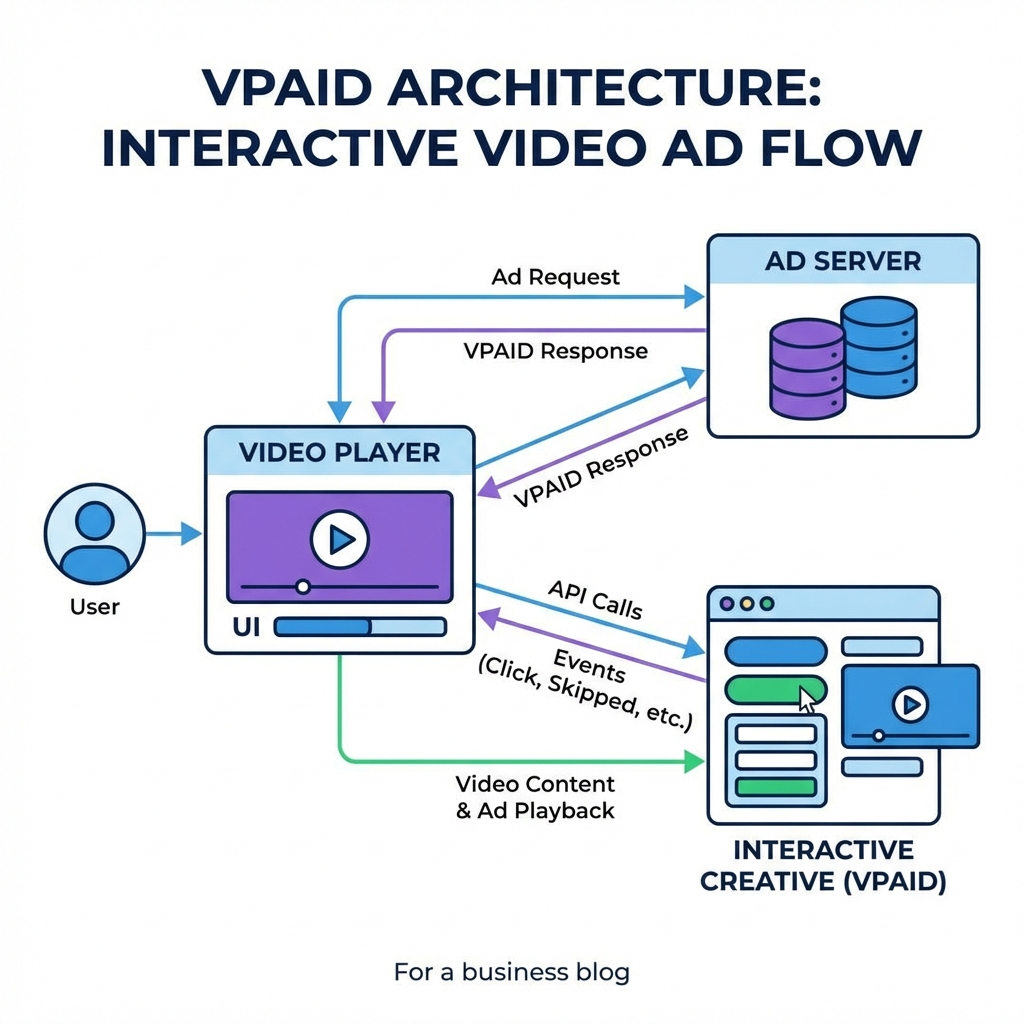
VPAID operates through a three-way communication system:
- Ad Server: Delivers the VPAID creative and initial parameters
- Video Player: Hosts the ad and provides the runtime environment
- VPAID Creative: The interactive ad application itself
VPAID Event Flow
When a VPAID ad loads, it follows this sequence:
- Initialization: The video player requests ad content from the ad server
- Creative Loading: The VPAID creative is downloaded and initialized
- Handshake: The player and creative establish communication protocols
- Playback: The interactive ad begins execution
- Event Tracking: User interactions and viewing events are captured
- Completion: The ad finishes and returns control to the player
Technical Implementation Requirements
For successful VPAID implementation, publishers need:
- Compatible Video Player: Must support VPAID 2.0 specification
- Ad Server Integration: Properly configured to serve VPAID creatives
- JavaScript Runtime: Modern browsers with JavaScript enabled
- Fallback Mechanisms: Linear video alternatives for unsupported environments
VPAID Benefits for Publishers
Enhanced Revenue Opportunities
VPAID ads typically command higher CPMs than standard linear video ads due to their interactive capabilities:
- Premium Pricing: Interactive formats often generate 20-40% higher CPMs
- Better Fill Rates: More advertisers compete for VPAID inventory
- Extended Engagement: Longer interaction times can justify premium rates
- Advanced Targeting: Rich data collection enables more precise audience targeting
Improved User Experience
When implemented correctly, VPAID can enhance rather than disrupt the user experience:
- Relevant Interactions: Users can engage with content that interests them
- Customizable Experience: Ads can adapt to user preferences and behavior
- Seamless Integration: Interactive elements feel native to the content environment
- Value Exchange: Users receive something (information, entertainment, offers) in return for attention
Detailed Analytics and Insights
VPAID provides granular data collection capabilities:
- Interaction Metrics: Click-through rates, hover time, element engagement
- Viewing Behavior: Pause points, replay actions, completion rates
- User Journey: How viewers navigate through interactive elements
- Performance Data: Load times, error rates, compatibility metrics
Common VPAID Use Cases and Examples
Interactive Overlays
VPAID enables sophisticated overlay experiences:
- Product Showcases: Clickable hotspots revealing product details
- Social Integration: Share buttons, like counters, comment features
- Navigation Menus: Allow users to explore different content paths
- Call-to-Action Elements: Dynamic CTAs that adapt based on user behavior
Expandable Video Units
Ads that can resize based on user interaction:
- Hover Expansion: Video enlarges when users show interest
- Click-to-Expand: Full-screen experiences triggered by user action
- Multi-Stage Reveals: Progressive disclosure of content and features
- Companion Experiences: Secondary content areas that complement the main video
Gamified Advertising
VPAID enables game-like ad experiences:
- Mini-Games: Interactive challenges related to the advertised product
- Quizzes and Polls: Engaging question-based interactions
- Progressive Experiences: Multi-level interactions that unlock content
- Reward Mechanisms: Points, badges, or prizes for engagement
Implementation Best Practices
Technical Optimization
File Size and Loading
- Optimize Creative Size: Keep VPAID files under 2MB when possible
- Implement Progressive Loading: Load essential elements first, secondary features later
- Provide Linear Fallbacks: Always include MP4 alternatives for compatibility
- Test Load Times: Monitor performance across different connection speeds
Cross-Platform Compatibility
- Multi-Browser Testing: Ensure functionality across Chrome, Safari, Firefox, Edge
- Mobile Optimization: Touch-friendly interfaces and responsive design
- Device-Specific Features: Leverage device capabilities (accelerometer, geolocation) appropriately
- Accessibility Compliance: Support screen readers and keyboard navigation
User Experience Guidelines
Interaction Design
- Clear Visual Cues: Make interactive elements obviously clickable or touchable
- Intuitive Navigation: Follow established UX patterns and conventions
- Feedback Mechanisms: Provide immediate response to user actions
- Exit Options: Always allow users to skip or close interactive elements
Performance Considerations
- Resource Management: Properly dispose of memory and CPU-intensive operations
- Battery Impact: Minimize drain on mobile devices
- Network Usage: Optimize data consumption for mobile users
- Heat Generation: Avoid excessive processor usage that could cause device heating
VPAID Challenges and Solutions
Ad Blocking and Viewability
Challenge: VPAID ads are more likely to be blocked by ad blockers due to their JavaScript nature.
Solutions:
- Implement server-side ad insertion where possible
- Use native advertising approaches that blend with content
- Provide clear value propositions for ad-supported content
- Develop relationships with premium, ad-block-free inventory sources
Technical Complexity
Challenge: VPAID implementation requires more technical expertise than linear video ads.
Solutions:
- Partner with experienced ad tech vendors
- Invest in developer training and documentation
- Implement comprehensive testing frameworks
- Use video player solutions like Veedmo that provide built-in VPAID support and simplified integration
Performance Issues
Challenge: Poorly optimized VPAID ads can impact site performance and user experience.
Solutions:
- Establish creative guidelines and file size limits
- Implement timeouts for slow-loading ads
- Monitor performance metrics continuously
- Use quality assurance tools to test ad performance before deployment
VPAID vs VAST vs SIMID
VPAID vs VAST
VAST (Video Ad Serving Template) is designed for linear video ads, while VPAID handles interactive content:
- VAST: Simpler implementation, better performance, universal compatibility
- VPAID: Interactive capabilities, rich data collection, premium pricing
- Use Cases: VAST for standard pre-roll/mid-roll, VPAID for interactive campaigns
VPAID vs SIMID
SIMID (Secure Interactive Media Interface Definition) is the next-generation standard addressing VPAID limitations:
- Security: SIMID provides better isolation between ad and page content
- Performance: More efficient resource usage and better mobile optimization
- Future-Proofing: SIMID is designed for modern web standards and practices
- Transition: Many publishers are gradually migrating from VPAID to SIMID
Measuring VPAID Success
Key Performance Indicators
Revenue Metrics
- CPM Uplift: Compare VPAID vs linear ad rates
- Fill Rate: Percentage of ad requests successfully filled with VPAID
- Revenue Per Visitor: Overall impact on site monetization
- Advertiser Retention: Repeat business from interactive campaign buyers
Engagement Metrics
- Interaction Rate: Percentage of viewers who engage with interactive elements
- Time Spent: Average duration users spend interacting with ads
- Completion Rate: Percentage of ads viewed to completion
- Click-Through Rate: Actions taken after ad interaction
Technical Performance
- Load Time: Average time for VPAID creative initialization
- Error Rate: Percentage of ads that fail to load or execute properly
- Compatibility: Success rates across different browsers and devices
- Resource Usage: Impact on page load speed and performance
Analytics Implementation
Implement comprehensive tracking through:
- Native VPAID Events: Built-in tracking for standard interactions
- Custom Event Tracking: Publisher-defined metrics for specific KPIs
- Third-Party Analytics: Integration with Google Analytics, Adobe Analytics
- Real-Time Monitoring: Dashboard systems for immediate performance insights
Future of VPAID and Interactive Video Advertising
Industry Trends
The interactive video advertising landscape continues evolving:
- Connected TV Integration: VPAID concepts expanding to CTV and streaming platforms
- AI-Powered Personalization: Machine learning driving dynamic ad content
- Augmented Reality: AR elements integrated into video advertising
- Voice Interaction: Audio-based interactive elements for smart speakers and voice assistants
Migration to Modern Standards
While VPAID remains widely used, the industry is gradually transitioning:
- SIMID Adoption: New projects increasingly choosing SIMID over VPAID
- Web Standards Evolution: Modern browsers and security requirements driving change
- Performance Optimization: Next-generation standards addressing VPAID's limitations
- Cross-Platform Consistency: Better standardization across different device types
Conclusion
VPAID continues to play a crucial role in digital video advertising, offering publishers the opportunity to deliver engaging, interactive ad experiences that command premium pricing. While the technology presents implementation challenges, the benefits of increased engagement, better analytics, and higher revenue potential make it a valuable component of a comprehensive video advertising strategy.
Success with VPAID requires careful attention to technical implementation, user experience design, and performance optimization. Publishers who invest in proper VPAID implementation—whether through internal development or partnerships with experienced ad tech providers—can unlock significant value from their video inventory.
As the industry evolves toward newer standards like SIMID, publishers should maintain VPAID capabilities while preparing for future transitions. The core principles of interactive video advertising will remain constant: delivering value to users, advertisers, and publishers through engaging, well-executed ad experiences that respect user choice and site performance.
Frequently asked questions
What is the difference between VPAID and VAST?
VAST serves linear video ads that play from start to finish without interaction, while VPAID enables interactive ads with user engagement features, overlays, and real-time data collection. VPAID ads are more complex but offer higher CPMs and better engagement metrics.
Do VPAID ads work on mobile devices?
Yes, VPAID 2.0 supports mobile devices through JavaScript implementation. However, mobile VPAID ads require careful optimization for touch interfaces, slower processors, and limited bandwidth to ensure good user experience.
Why do VPAID ads have higher CPMs than linear video ads?
VPAID ads command premium pricing because they offer interactive features, detailed analytics, better user engagement, and more sophisticated targeting capabilities. Advertisers pay more for these enhanced features and the typically higher engagement rates they generate.
What are common VPAID implementation challenges?
Main challenges include ad blocker interference, technical complexity requiring specialized development skills, potential performance issues affecting site speed, and ensuring cross-browser compatibility. Proper testing and optimization help address these issues.
Is VPAID being replaced by newer standards?
While VPAID remains widely used, the industry is gradually adopting SIMID (Secure Interactive Media Interface Definition) for new implementations. SIMID addresses VPAID's security and performance limitations while maintaining interactive capabilities.